Giant anteater
Myrmecophaga tridactyla
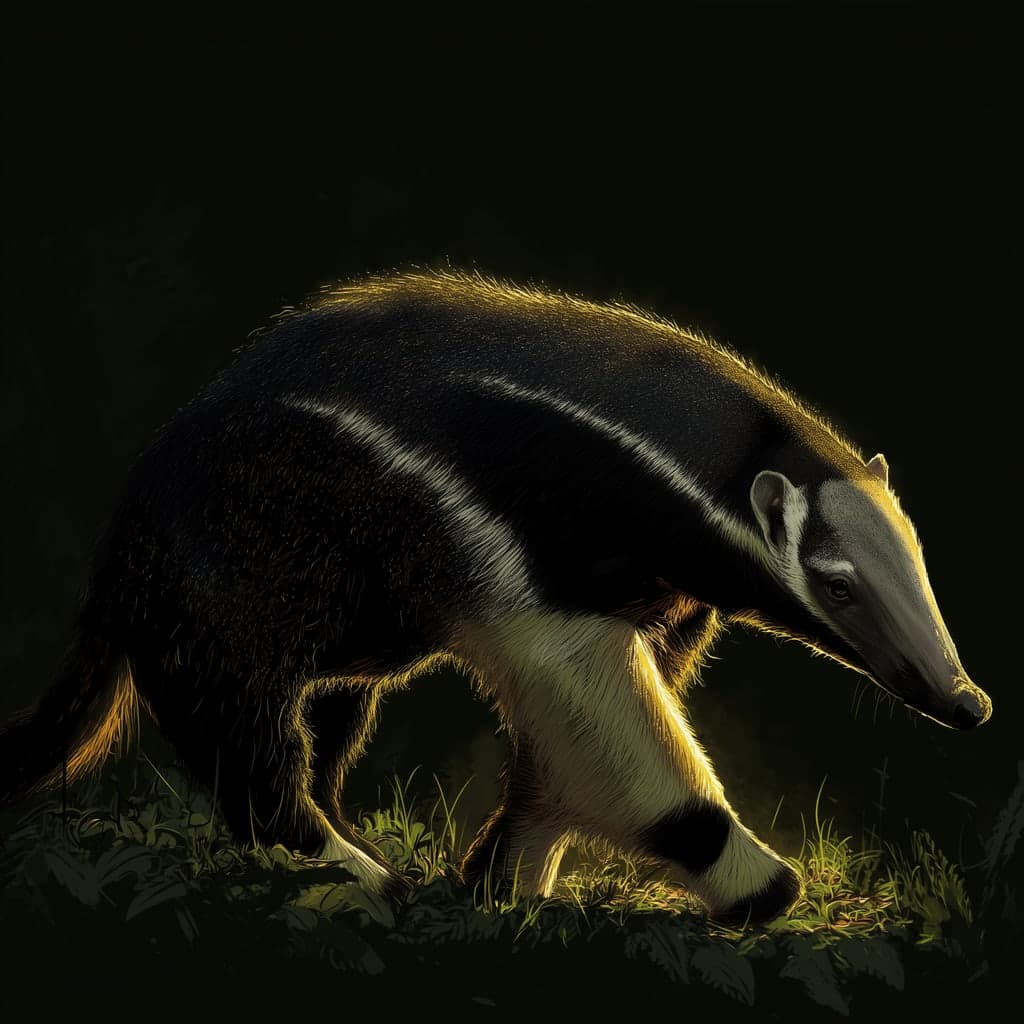
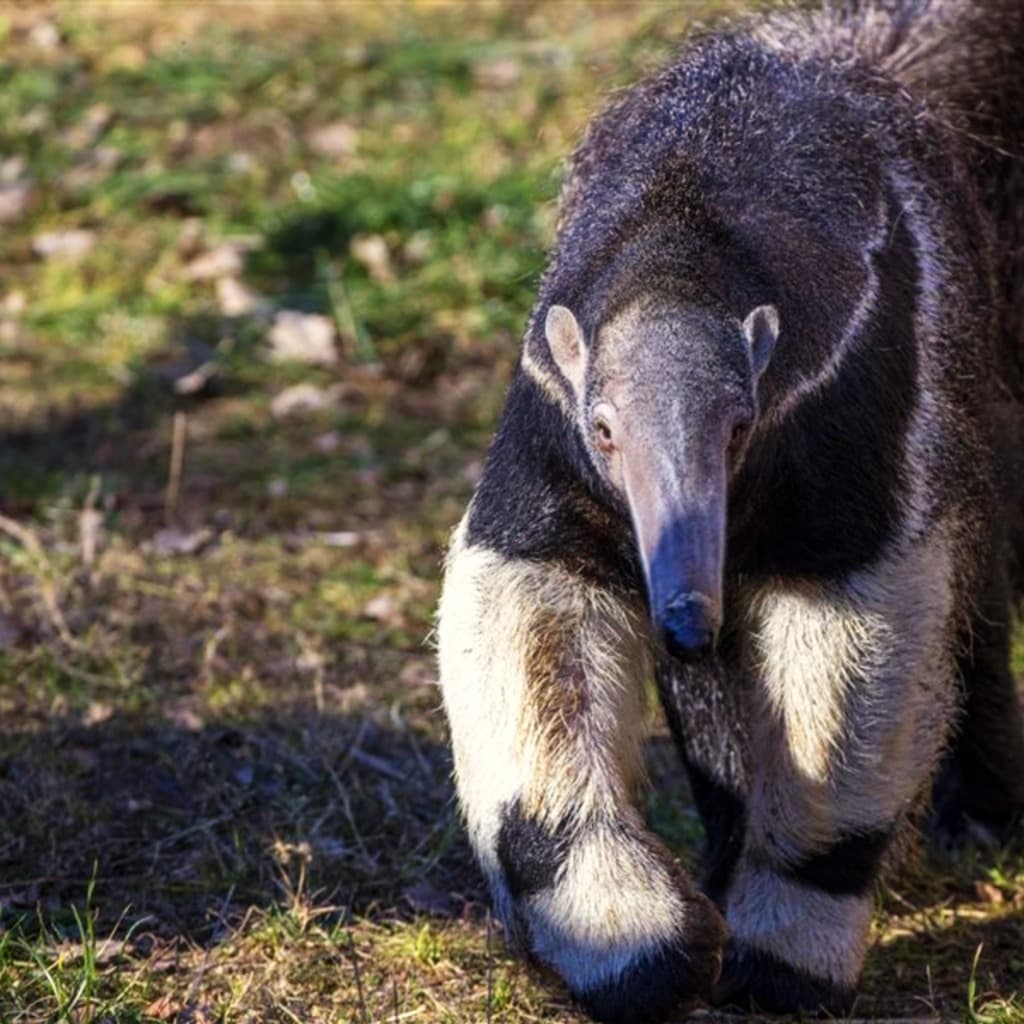 Seen by the oracle
Its power
It doesn’t have a single tooth. Its sixty-centimetre tongue flicks in and out a hundred and fifty times a minute.
Estimated wild population
Fewer than 10,000 adults
Trend
Declining
Range
Central America / South America (as far as Argentina)
Main threat
Plantation fires (sugar cane), heavy hunting, road accidents
Meet it
It really exists. It is waiting for you at the Parc Animalier d’Auvergne.
The giant anteater is a truly unusual mammal. It has no teeth, and its tongue, which can stretch up to 60 cm and flick in and out 150 times a minute, lets it slurp up to 35,000 ants and termites a day. Its sense of smell is 40 times stronger than a human’s, so it can find termite mounds from far away. Its long curved claws are so strong that it walks on its knuckles to protect them. Even though it eats such special food, it can live in many different kinds of places. In South America, its main threat is grassland being set on fire to grow sugar cane. A reintroduction programme is running in Corrientes province, in Argentina.
What the Park does
Reintroduction programme in Corrientes (Argentina), local awareness-raising