Rothschild’s giraffe
Giraffa camelopardalis rothschildi
 Seen by the oracle
Its power
Its black tongue, forty-five centimetres long, never gets sunburnt. And its neck has only seven bones, just like yours.
Estimated wild population
About 1,600 to 2,000 in the wild
Trend
Declining (Endangered in 2010, listed as Near Threatened by the IUCN since 2018)
Range
Kenya / Uganda
Main threat
Poaching, habitat loss, armed conflict, populations split into small groups
Meet it
It really exists. It is waiting for you at the Parc Animalier d’Auvergne.
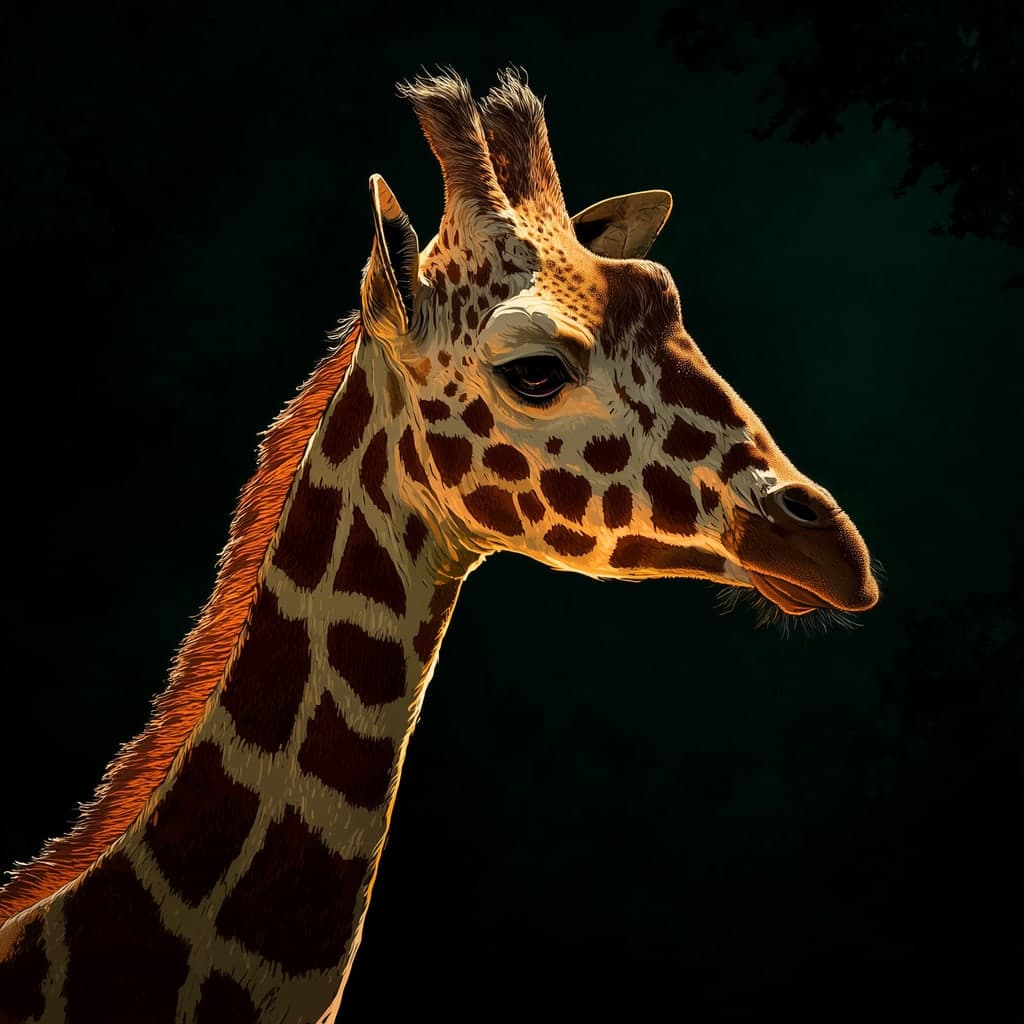
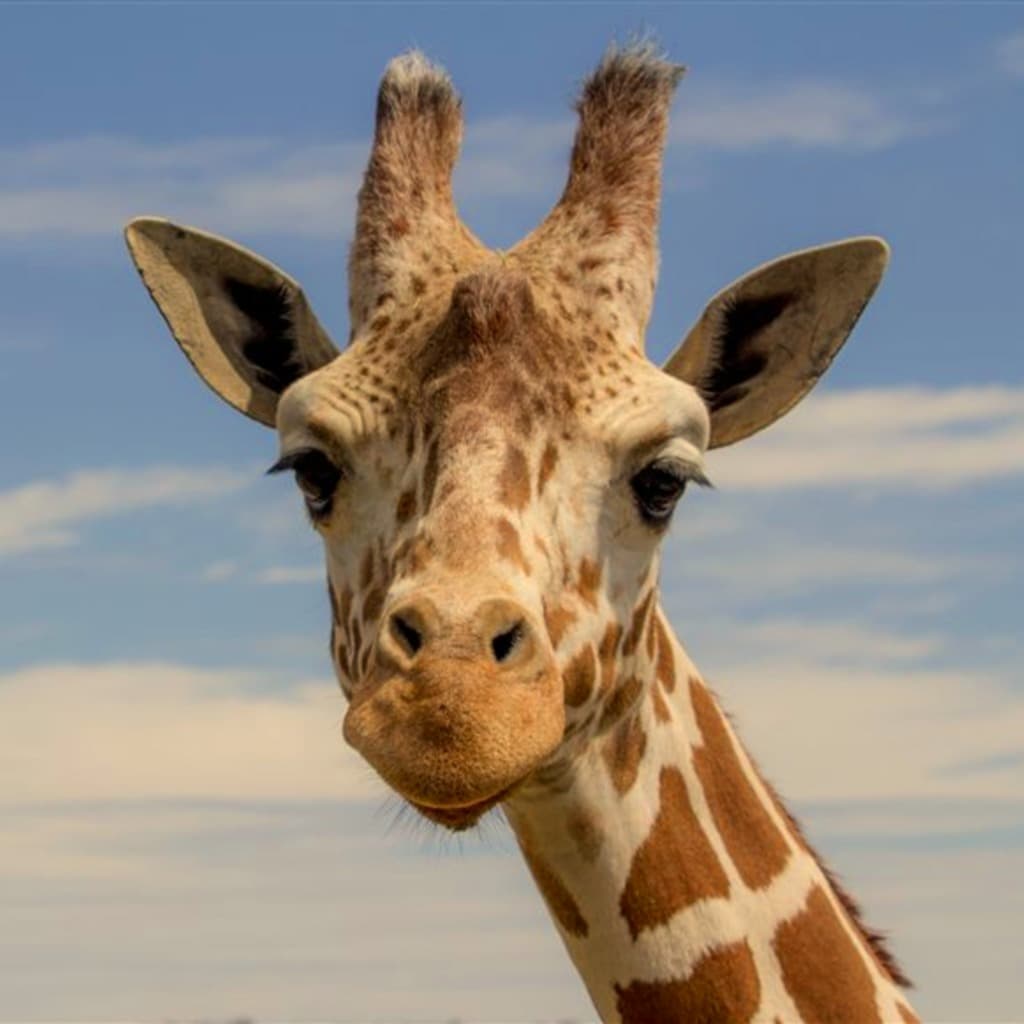
Rothschild’s giraffe is one of the most threatened kinds of giraffe in the world. You can recognise it by its bright orange-brown patches, outlined with clear cream lines, and by its five ossicones (bony horns): two large ones on top of the head, one in the middle of the forehead and two behind the ears. It can grow up to 5.5 metres tall and weigh up to 1.1 tonnes, making it one of the largest land animals. It lives in groups that move around a lot, in the wooded savannahs of East Africa. In 2016, only 1,671 were left in the wild, mostly in Kenya and Uganda. Moving animals to new places (translocation) has helped bring giraffes back to areas where they used to live.
What the Park does
Translocation programme in Kenya and Uganda, Giraffe Conservation Foundation, EEP programme