Golden-headed lion tamarin
Leontopithecus chrysomelas

 Seen by the oracle
Its power
Its very long fingers poke into hollows in plants and reach what nobody else can.
Estimated wild population
6,000 to 15,000
Trend
Declining (59% in 30 years)
Range
Bahia State, Brazil
Main threat
Deforestation for farming and cattle ranching (about 12% of the Atlantic Forest remains), habitat fragmentation, illegal trade
Meet it
It really exists. It is waiting for you at the Parc Animalier d’Auvergne.
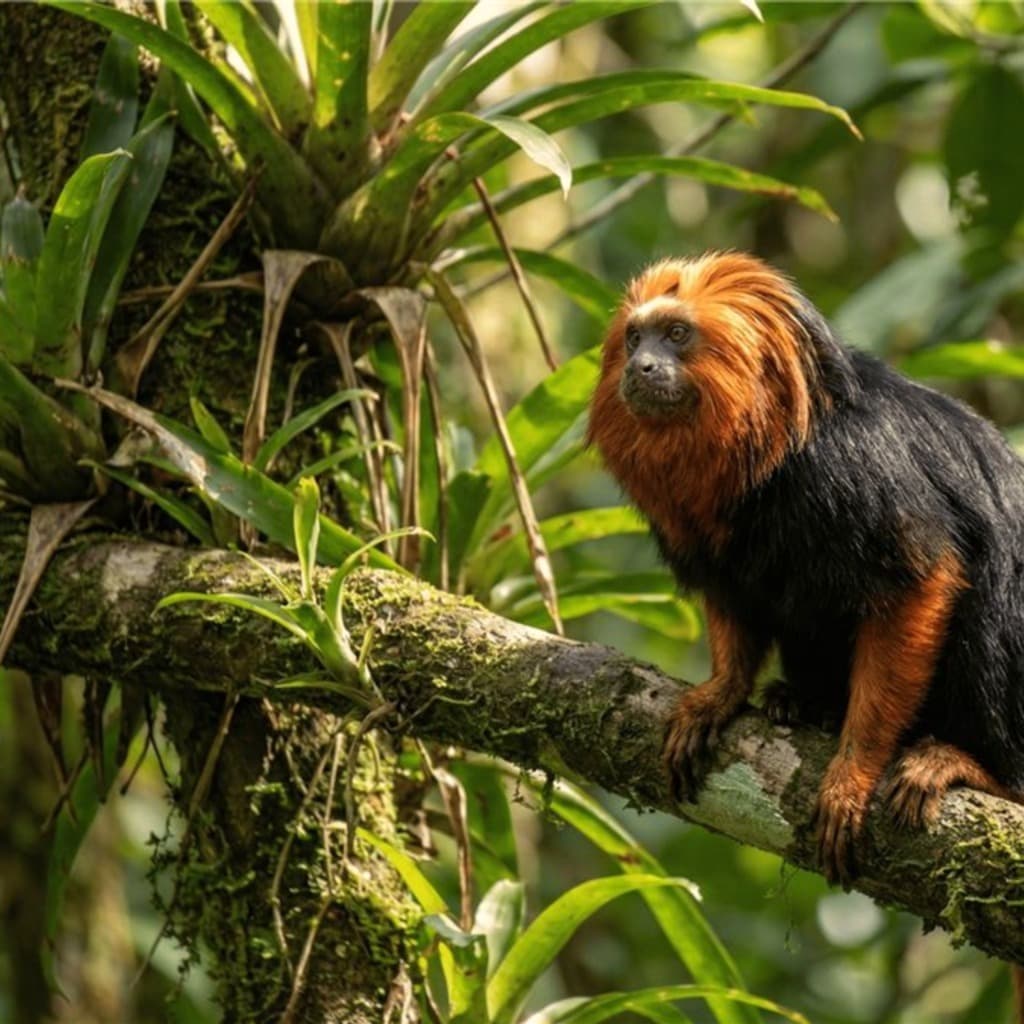
With its blazing golden mane against a jet-black body, the golden-headed lion tamarin is one of the most spectacular primates in South America. It lives in family groups of 4 to 15 high in the treetops, moving between 3 and 10 metres above the ground, and almost never comes down. It eats both plants and animals: fruit, insects, small lizards and flower nectar. It lives in Brazil’s Atlantic Forest, one of the most threatened ecosystems on the planet, of which only about 12% of the original area remains. There are thought to be between 6,000 and 15,000 left in the wild, most of them in the state of Bahia.
What the Park does
Una Biological Reserve (created in 1980 to protect it), EEP captive programme, international committee for the conservation of lion tamarins