South American tapir
Tapirus terrestris
 Seen by the oracle
Its power
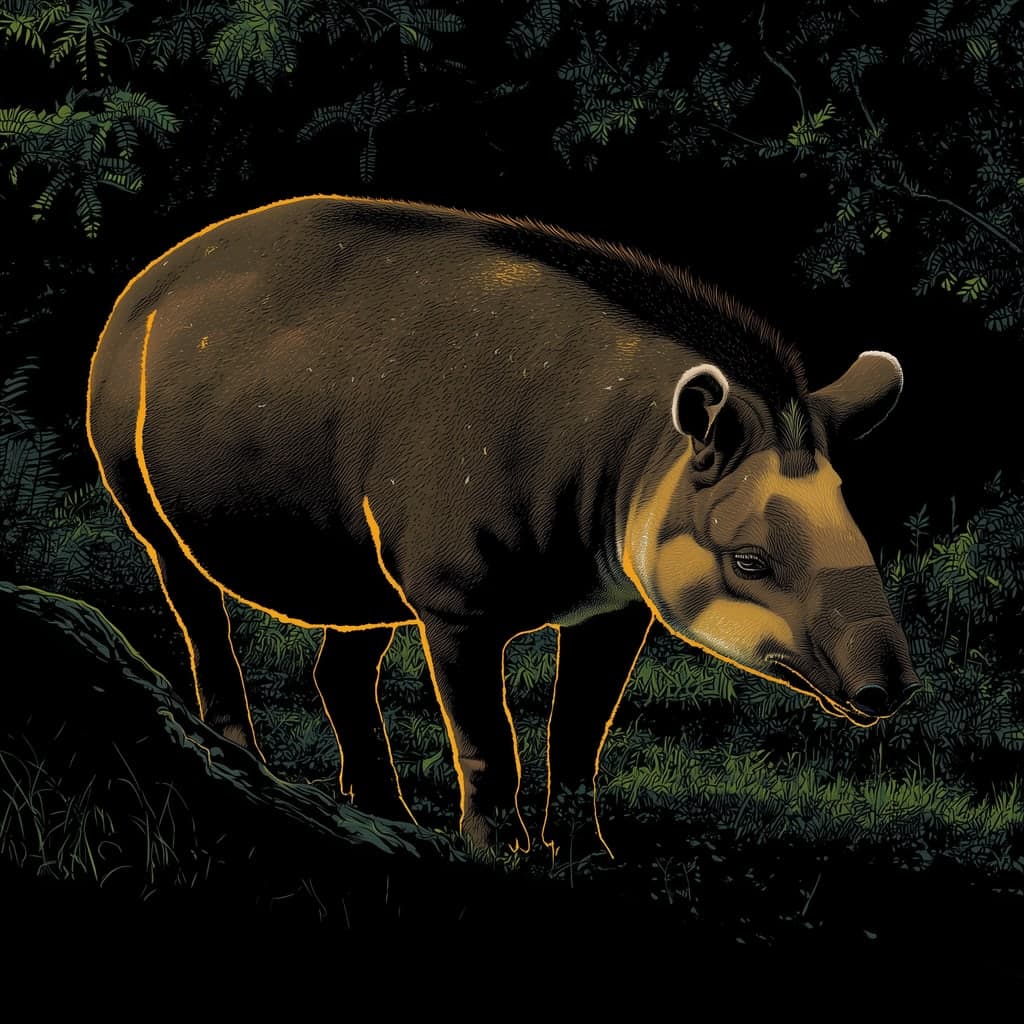
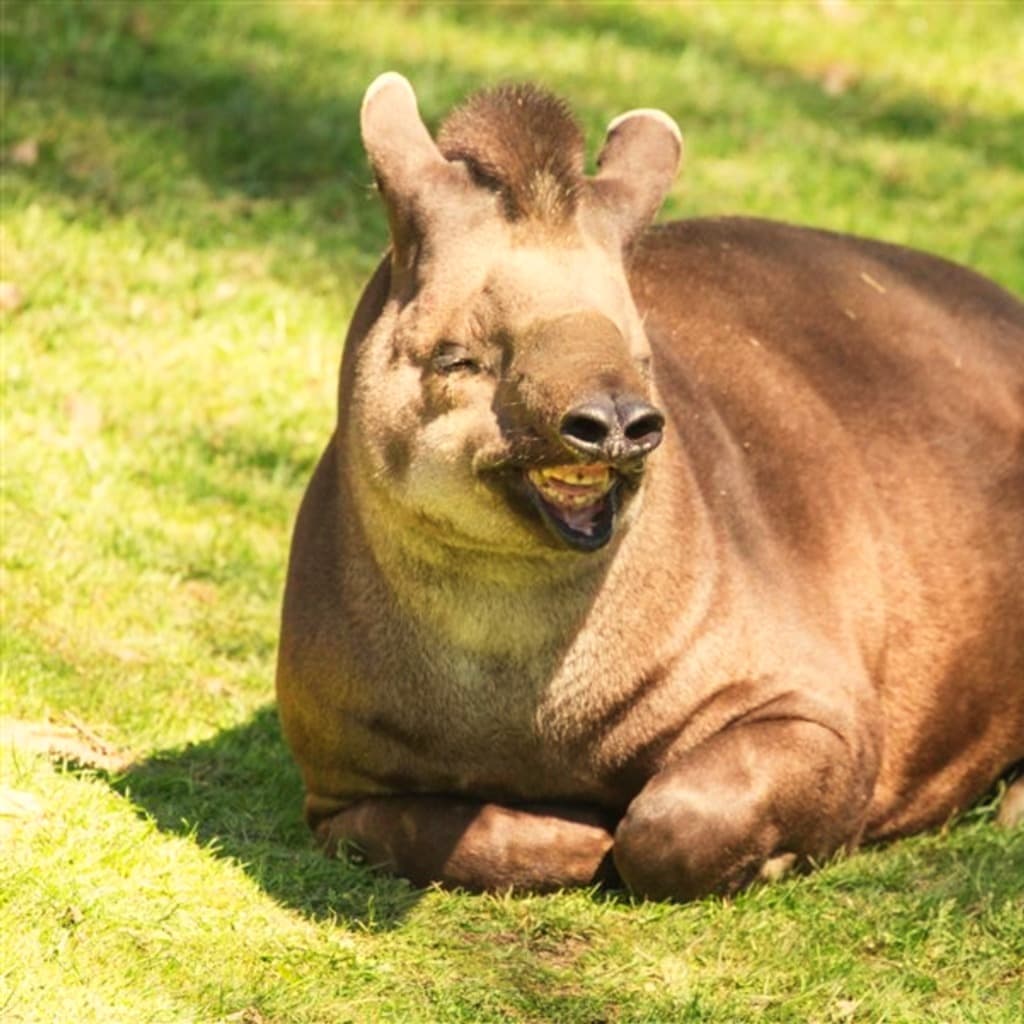
Its trunk picks leaves, and its droppings replant the forest. People call it the gardener of the jungle.
Estimated wild population
Not estimated worldwide (2,665 to 15,992 in the Atlantic Forest alone)
Trend
Declining
Range
South America (Venezuela, Colombia, Brazil, Argentina)
Main threat
Deforestation, poaching for meat, road accidents, habitat fragmentation
Meet it
It really exists. It is waiting for you at the Parc Animalier d’Auvergne.
The South American tapir is an ancient kind of mammal whose body has hardly changed in 35 million years: a real living fossil. Its short, bendy trunk, made from its nose and upper lip, helps it grab plants, smell, and even breathe like a snorkel when it swims underwater. It eats plants and is an excellent swimmer, often spending time in water to cool off and escape predators (pumas and jaguars). It comes out at night, lives alone and roams huge territories. It plays a vital role in nature: it swallows whole fruits and poos far from the trees, spreading seeds all through the forest. That is why it is called the “gardener of the forest”.
What the Park does
Legal protection in most South American countries, reintroduction programme in Argentina