Tiger
Panthera tigris
 Seen by the oracle
Its power
Its stripes are as unique as a fingerprint. And it swims for kilometres where other cats refuse to go in the water.
Estimated wild population
About 3,700 to 5,600 in the wild (2022 IUCN estimate)
Trend
Stable or even increasing (but more than 100,000 a century ago)
Range
South, Southeast and East Asia
Main threat
Poaching for skins and bones (traditional medicine), deforestation, conflicts with livestock farmers
Meet it
It really exists. It is waiting for you at the Parc Animalier d’Auvergne.
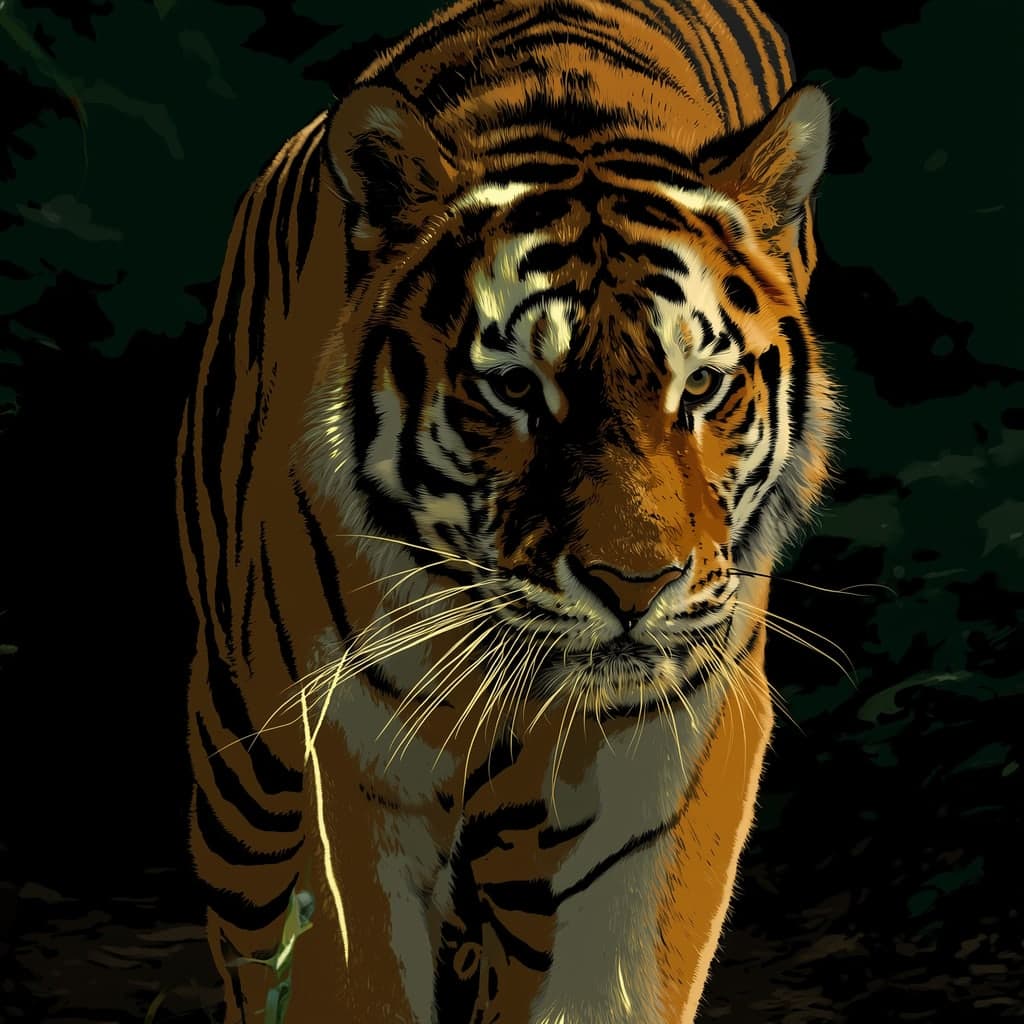
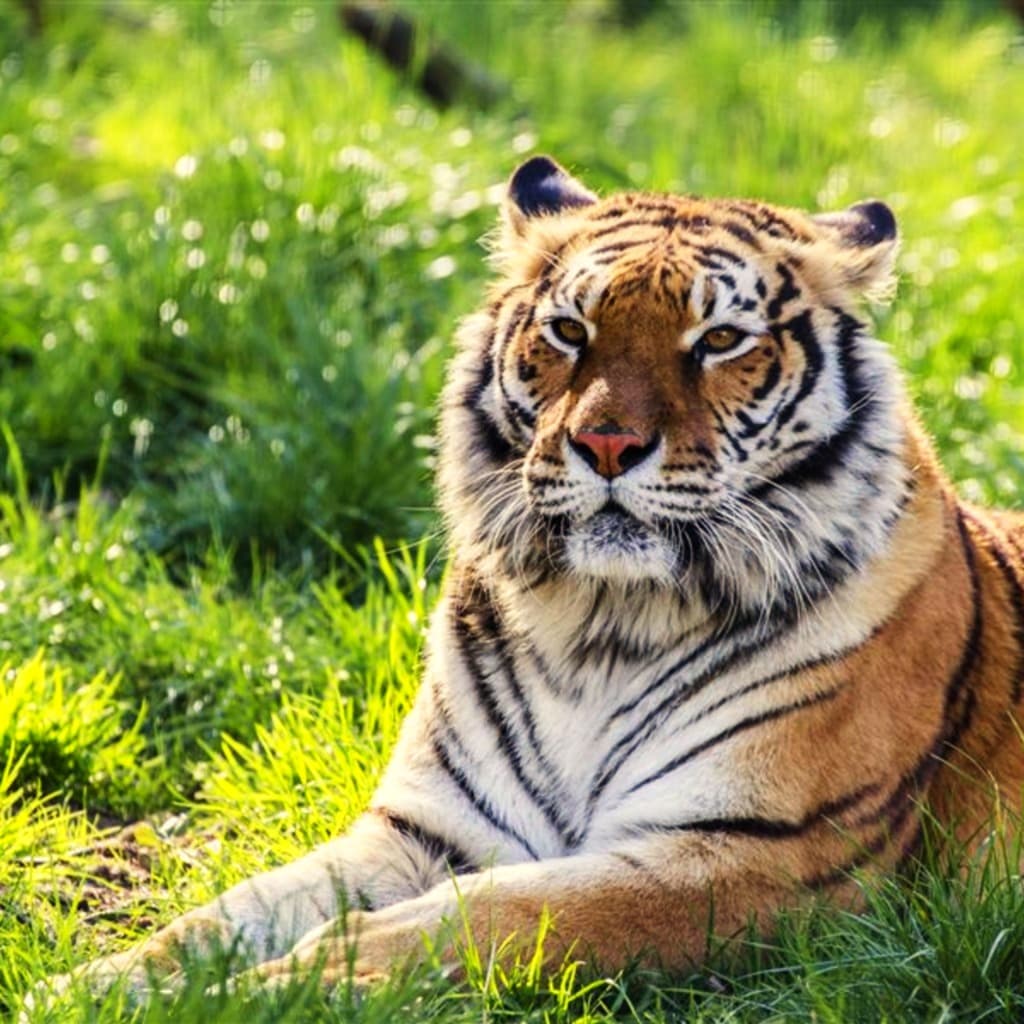
The tiger is the largest wild cat and one of the most impressive land predators on the planet. It lives alone and defends a territory that can cover up to 100 km², depending on how much prey there is. Unlike most cats, it is an excellent swimmer and loves bathing in rivers to cool off. Its roar can be heard more than 3 kilometres away. At the start of the 20th century, there were more than 100,000 tigers in the wild. Today, there are thought to be between 3,700 and 5,600 left, in scattered populations across Asia. Three subspecies (the Bali, Caspian and Javan tigers) died out during the last century.
What the Park does
Tx2 programme (doubling the population by 2022, partly achieved), protected reserves in India, Russia and Indonesia